-
Villa No. 1522, Road 2733 Block 327, Adliya, Bahrain

Starting school is a big step for any young child. For most kids, that first step outside the home shapes how they feel about classrooms, teachers, routines, and learning itself for years to come. A good early-years setting gives children the time they need to settle in, make friends, try new things, and gradually feel at ease away from their families. Bahrain’s Ministry of Education also treats early childhood education as a genuinely important stage for children’s thinking, social, emotional, and physical growth.
Pre-nursery is typically a child’s first taste of group learning before they move into more structured stages of school. Rather than sitting young children through formal lessons, a good programme lets them learn through play, conversation, movement, stories, creative work, and everyday routines.
This is where children start picking up things that aren’t always easy to teach at home. They learn to listen to someone other than a parent, wait their turn, put away their own things, say what they need, and join in with other children. These are the foundations they’ll build on as they move through nursery and into school proper.
Being ready for school isn’t just about knowing letters and numbers. Children also need to feel at ease following routines, talking to adults, joining in with group activities, and having a go at simple tasks on their own.
A pre-nursery setting allows children to build these skills bit by bit. They learn to come to school, say hello to the teachers, move from one activity to another, clean up after themselves, and be around other children. The more they do this, the more familiar it all becomes, rather than feeling new and a bit scary each time.
Play-based learning really earns its place here, since children build social, emotional, thinking, and physical skills all at once while actively exploring what’s around them.
Confidence in young children tends to grow out of small, everyday moments. A child who’s nervous about joining a group might start feeling braver just from watching others take part first, while another might find their confidence by picking an activity or finishing a simple task on their own.
Teachers encourage this by providing children with the chance to do things for themselves, rather than jumping in to do it for them immediately. Making small decisions such as what to do, what colour to wear, or what book to read helps children feel that their own ideas and likes or dislikes are valid and important.
Repetition also plays a critical role. As the school day falls into its usual routines, children begin to learn what to anticipate and what is anticipated of them. That feeling of knowing what’s coming can bring a real sense of security, while still letting children build confidence at their own pace.
Young children learn best through play, especially when it lets them explore, experiment, and interact with the people around them. Play helps children build language, movement, creativity, problem-solving, and social skills, all without learning ever feeling like a formal classroom task.
The pre-nursery programme brings together storytelling, music, creative play, counting activities, outdoor play, and hands-on exploration. Children get to follow what genuinely interests them while picking up communication and social skills along the way.
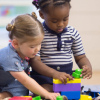
For a child who’s spent most of their time around family, being surrounded by a group of other children can feel like a whole new world. A pre-nursery or nursery setting gives children regular chances to practise sharing, listening, taking turns, cooperating, and speaking up for themselves.
They also get the idea that other children have ideas, likes and dislikes, and feelings that are not always the same as theirs. Learning to play together, sort out small disagreements, and join in group activities all help build that growing social awareness.
Friendships tend to grow naturally out of these shared moments. A child might start by just watching another child play, then join in, and before long, a familiar friendship has taken shape. These early connections can make the classroom feel like a much more welcoming, enjoyable place to be.
Young children still need plenty of support, but they also need genuine opportunities to do things for themselves. Little things like putting toys away, choosing what to do, carrying their own bag or following a simple routine all help them to become independent.
Teachers don’t have to expect full independence right away. Give children small tasks they can manage, and assist them until they feel comfortable doing more on their own.
The environment matters just as much as the activities themselves. Young children settle in and learn more easily when they feel secure, respected, and genuinely understood by the adults around them.
At Kidsworld Kindergarten, we are child-centred, with educators working to provide the children with space to play, explore, imagine and grow at their own pace.
For parents, this often involves looking beyond worksheets and purely academic activities in choosing an early-years setting. The relationship between educators and children, the feel of the classroom, the chances for play, and the way children are encouraged to express themselves all deserve a closer look.
The skills children build in these early years become the foundation for everything that follows. A child who grows comfortable listening to instructions, talking with teachers, working alongside classmates, and managing simple routines is quietly developing skills that stay useful as school becomes more structured.
Kidsworld’s path from Nursery to Reception, and then on to Year 1, reflects exactly this kind of gradual growth. Reception builds on what Nursery started, bringing in more structured learning, while Year 1 carries that progression further into deeper academic work.
This is not about rushing children through childhood. It’s about helping them grow steadily more comfortable with learning and the routines that come along with it.
When parents choose an early-years program, they usually want the right mix of learning, play, care and independence. Kidsworld Kindergarten offers a British Curriculum pathway where early learning stays firmly play-based, while children get introduced to communication, early literacy, numeracy, physical development, creativity, and social interaction.
At Kidsworld, children get the chance to explore different interests, take part in group activities, and build practical skills, all while growing familiar with school life along the way.
A child’s first experience of school doesn’t need to be about racing ahead academically. It can simply be about feeling comfortable in a new place, learning to communicate, making friends, trying something independently, and discovering that school can genuinely be a welcoming place to be.
For parents considering pre-nursery in Bahrain, finding the right environment can make that first step so much easier, for both the child and the family. Kidsworld Kindergarten offers an early-years setting where play, exploration, social growth, and growing independence are all woven into the learning journey. Learn more about the programme, visit our kindergarten and meet with the educators to determine whether it is the right fit for your child’s needs and stage of development.
Comments are closed