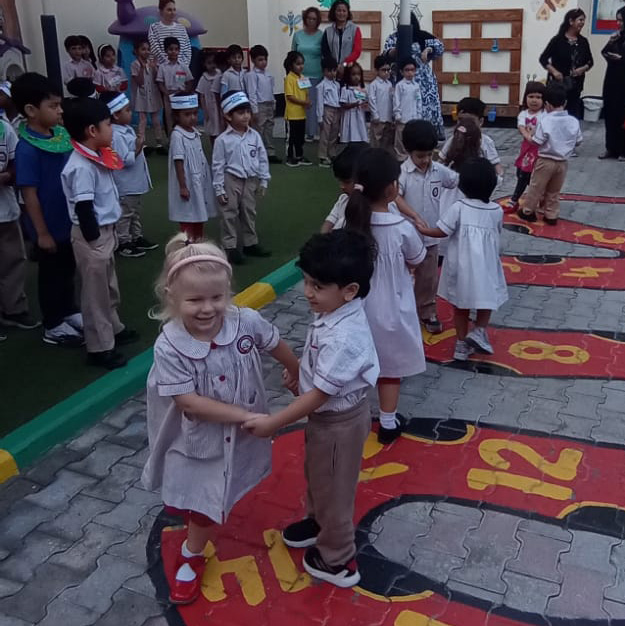
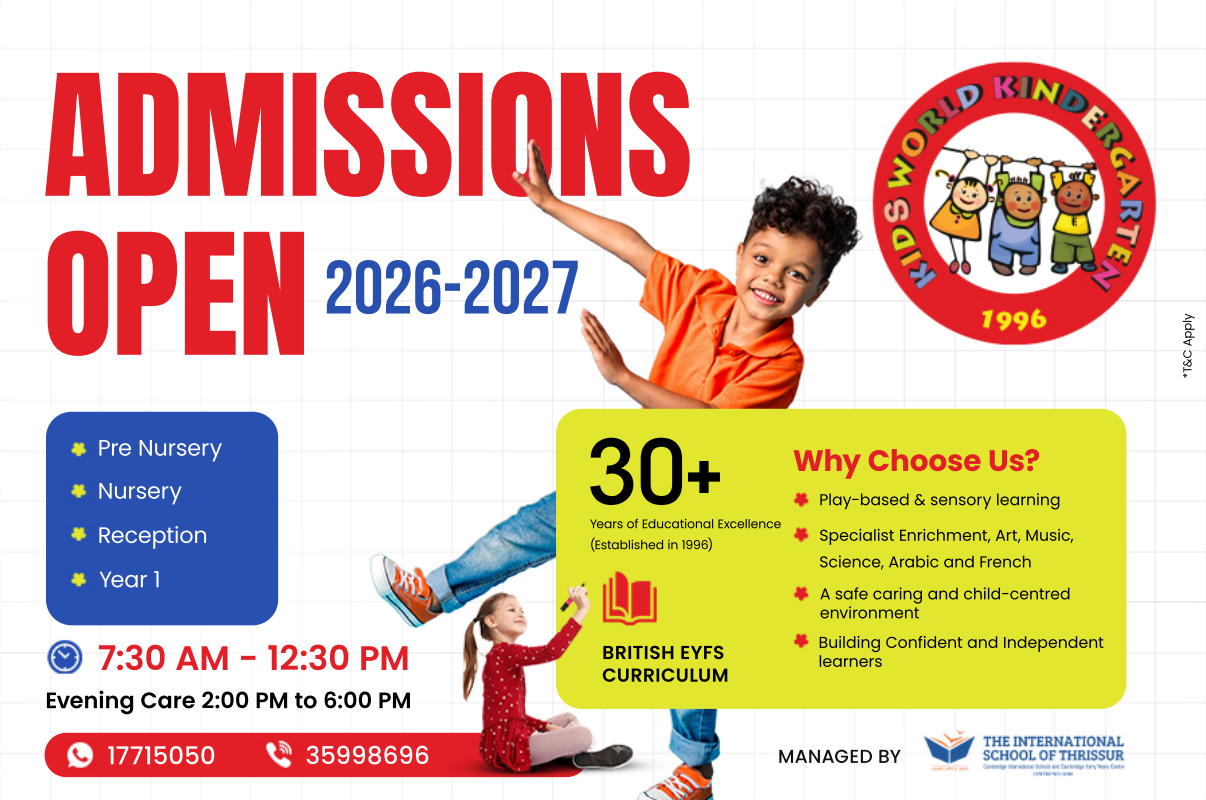
Reception is one of those years that the children seem to remember for a long time. This is where the open-ended exploration of nursery begins to give way to more structured learning – and where children begin to build the habits, skills and confidence they will carry into formal schooling. Kidsworld Kindergarten, Adliya, Bahrain offers a Reception programme for 4-5 year olds that combines structured learning with play, creativity and social development. We aim to develop confident learners ready for Year 1.
What Is Reception Class?
Reception is usually the first year of formal schooling for children aged four to five. It is building on what children have experienced already in nursery and at the same time gently introducing the routines and expectations of classroom learning.
At this stage, children begin developing early reading, writing and mathematical skills as well as the equally important skills of listening, communicating, co-operating and settling in to a classroom environment. When looking for reception classes in Bahrain, you should seek a setting that balances academic development with play, creativity and space for children to develop as individuals.
At Kidsworld Kindergarten, Reception sits as the second stage of the school’s British Curriculum pathway, bridging Nursery and Year 1.
What Will Your Child Learn in Reception?
Reception learning covers much more than academic subjects. Children develop across several connected areas at once; early reading, writing, and phonics alongside number awareness, communication, creativity, observation, physical coordination, cooperation, and independence. Children are also encouraged to develop their understanding of the world around them through the activities and conversations that make up the school day. This broad approach supports children in learning at their own pace while becoming increasingly comfortable with structured classroom life.
Developing Early Literacy and Phonics Skills
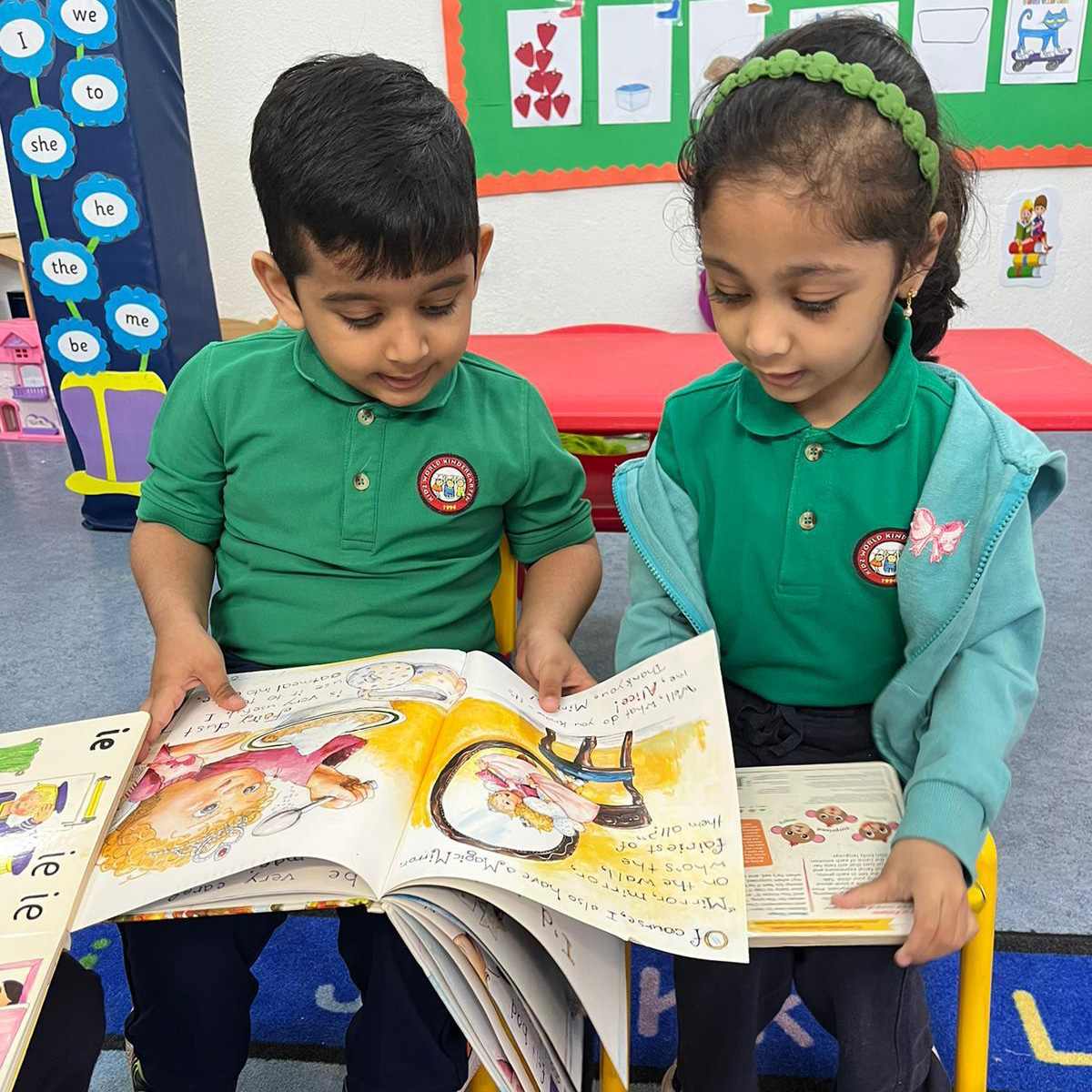
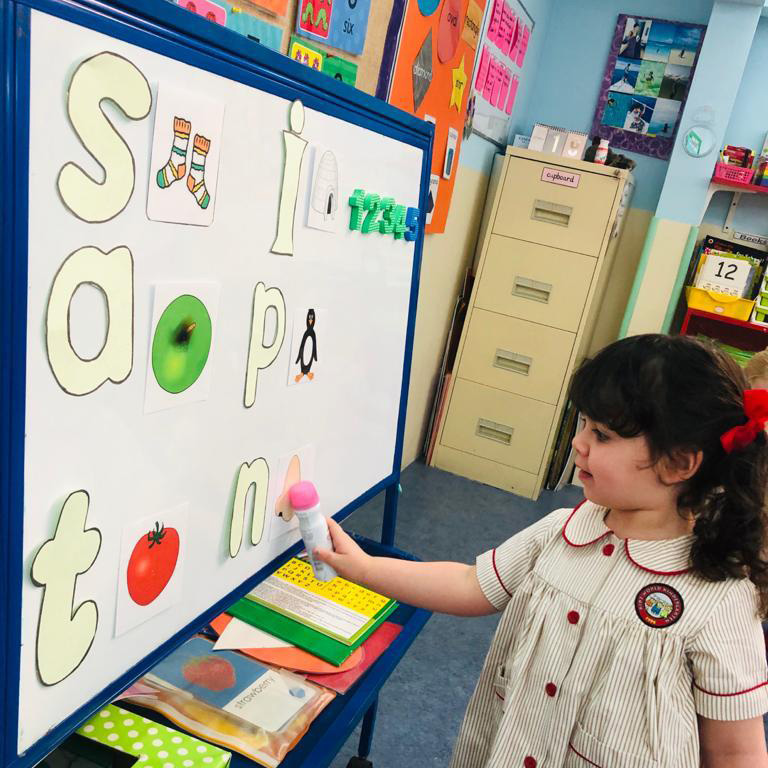
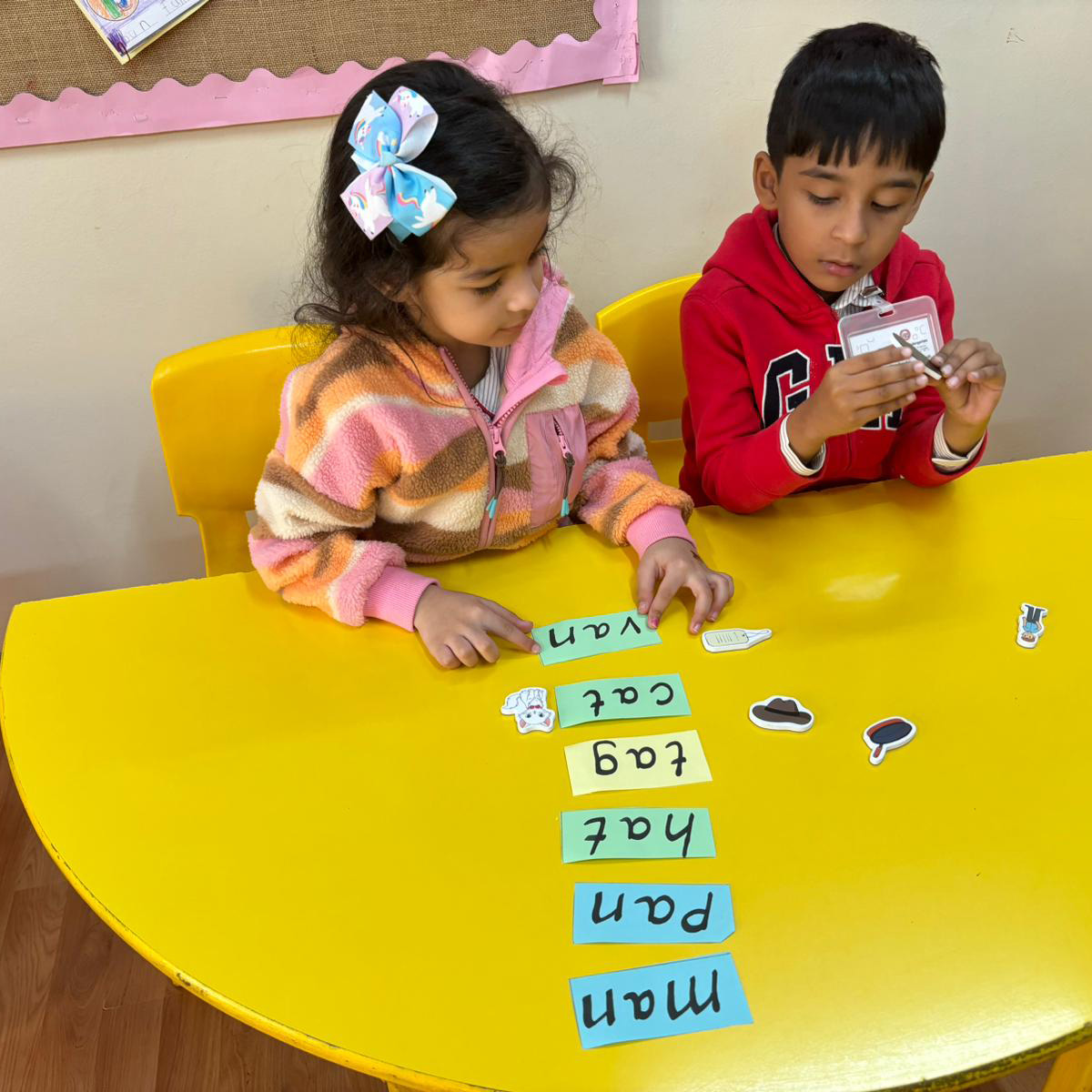
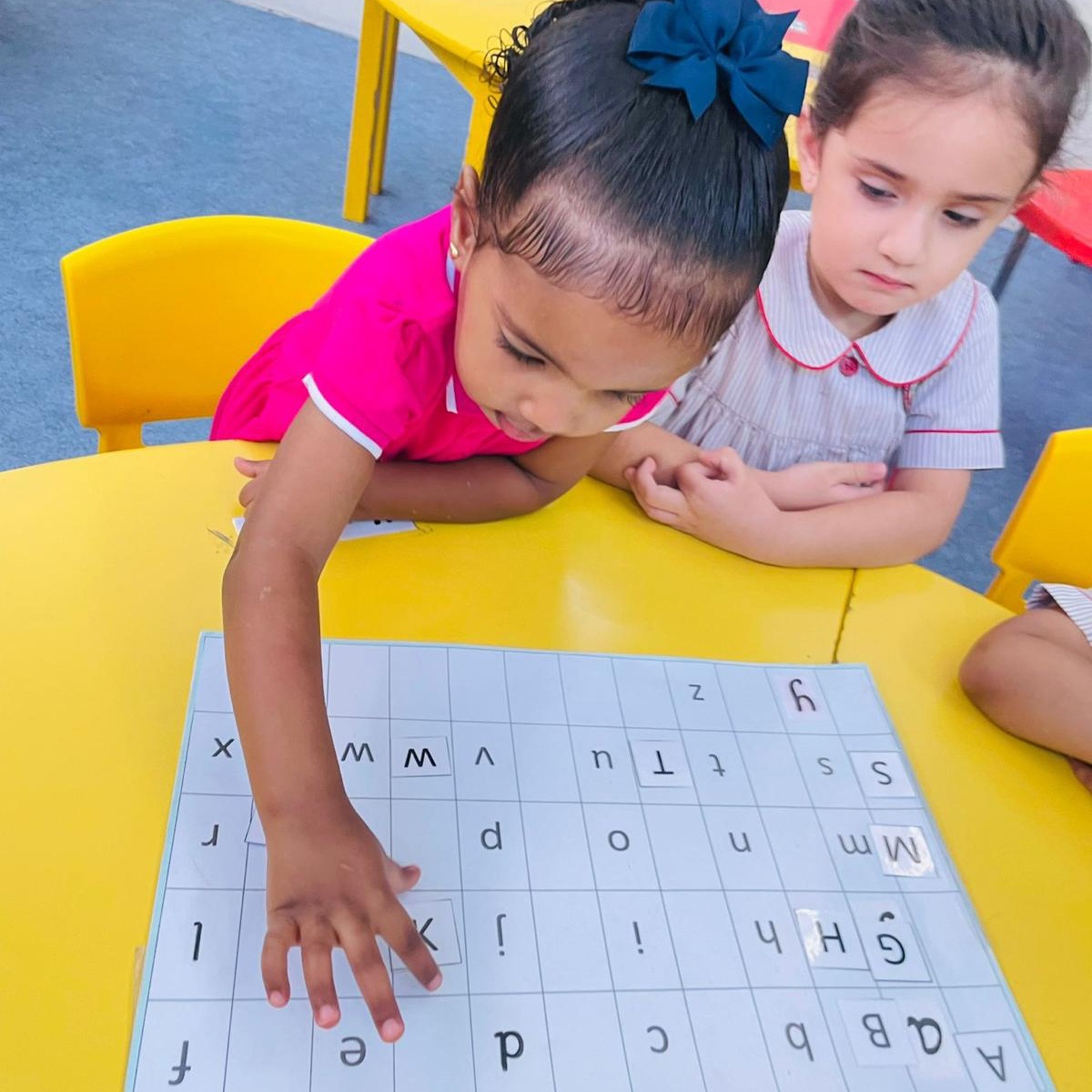
In Reception, children are given opportunities to further develop language skills they have already started to develop. Phonics activities help children to recognise sounds, to link those sounds to letters, and to start blending them into simple words. Vocabulary is built through stories, conversations, songs and the natural flow of classroom activity. When children start to read, they are given simple words and sentences that sound doable and enjoyable. Drawing, tracing and writing activities develop the fine motor skills that will be needed for handwriting. The focus throughout is on making language learning seem approachable and fun.
Building Early Maths Skills
In Reception, we do not introduce abstract mathematical concepts that children are expected to absorb without context. We introduce them through practical, hands-on activities. Children learn counting and number recognition, basic subtraction and addition, shapes and patterns, sorting and classification, size and quantity comparisons, basic measurement and how things compare in space. Using objects, games, and everyday situations makes mathematical ideas something children can actually understand and apply.
Learning Through Play and Exploration
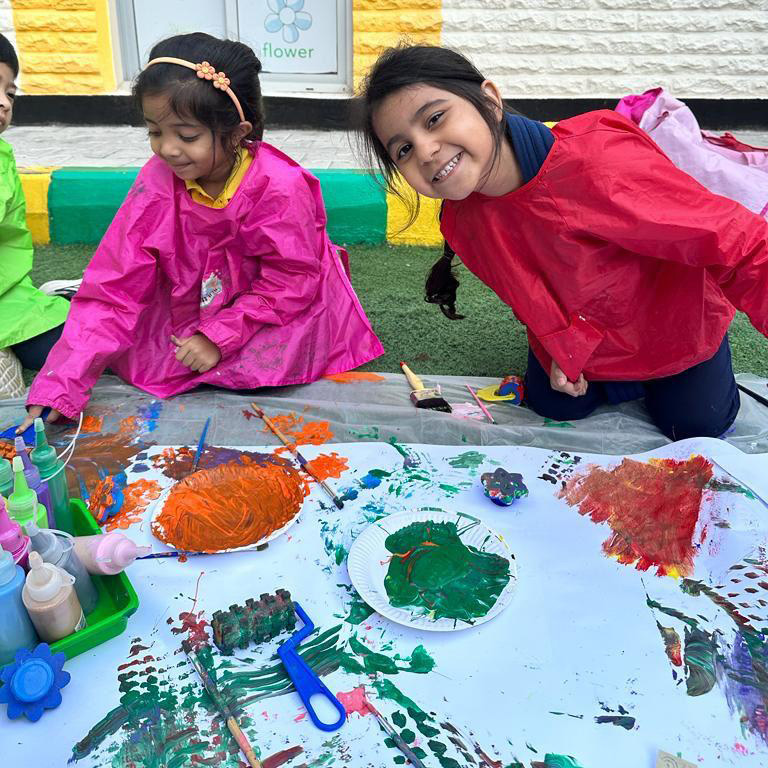
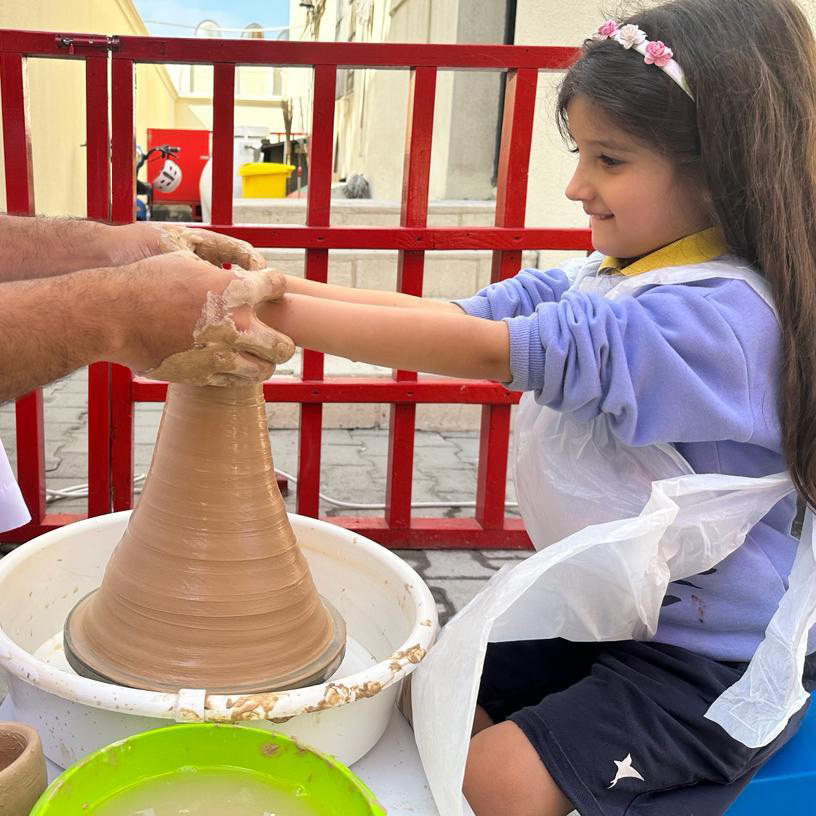
Play doesn’t disappear in Reception. It remains a genuinely important part of how children this age learn. Through role-play, construction, creative projects, games, and hands-on activities, children explore ideas, ask questions, experiment, and find their own solutions to problems. Play also offers natural opportunities for children to practice communicating, working together, and making decisions in situations that seem real to them.
The play-based approach does not mean that learning is unstructured or random. Teachers draw on children’s curiosity and interests to help make learning meaningful by providing age-appropriate ideas through the things that capture children’s attention.
Supporting Social and Emotional Development
Starting school is about a great deal more than phonics and counting. Children in Reception are also learning how to be part of a group, how to share, take turns, listen to others, express their own feelings, and start to understand that other people see things differently. They’re building friendships, learning to ask for help, and becoming more comfortable with the expectations of classroom life.
Teachers offer consistent, patient guidance throughout this process, supporting children as they find their footing with classmates and gradually become more confident participants in group activities.
Encouraging Independence and Confidence
One of the important things Reception does is help children take on small responsibilities such as sorting their belongings, choosing between activities, following daily routines and doing age-appropriate work. They’re not dramatic milestones, but they add up to something meaningful: children who feel they can handle the daily demands of life at school.
Teachers don’t expect children to become independent in a day. Support is always there, and the step to increased responsibility is taken gradually so children can develop confidence at their own pace.
A Typical Day in Reception
No two days are identical, but a typical Reception day at our kindergarten brings together structured learning and freer exploration in a rhythm children come to know and feel comfortable with.
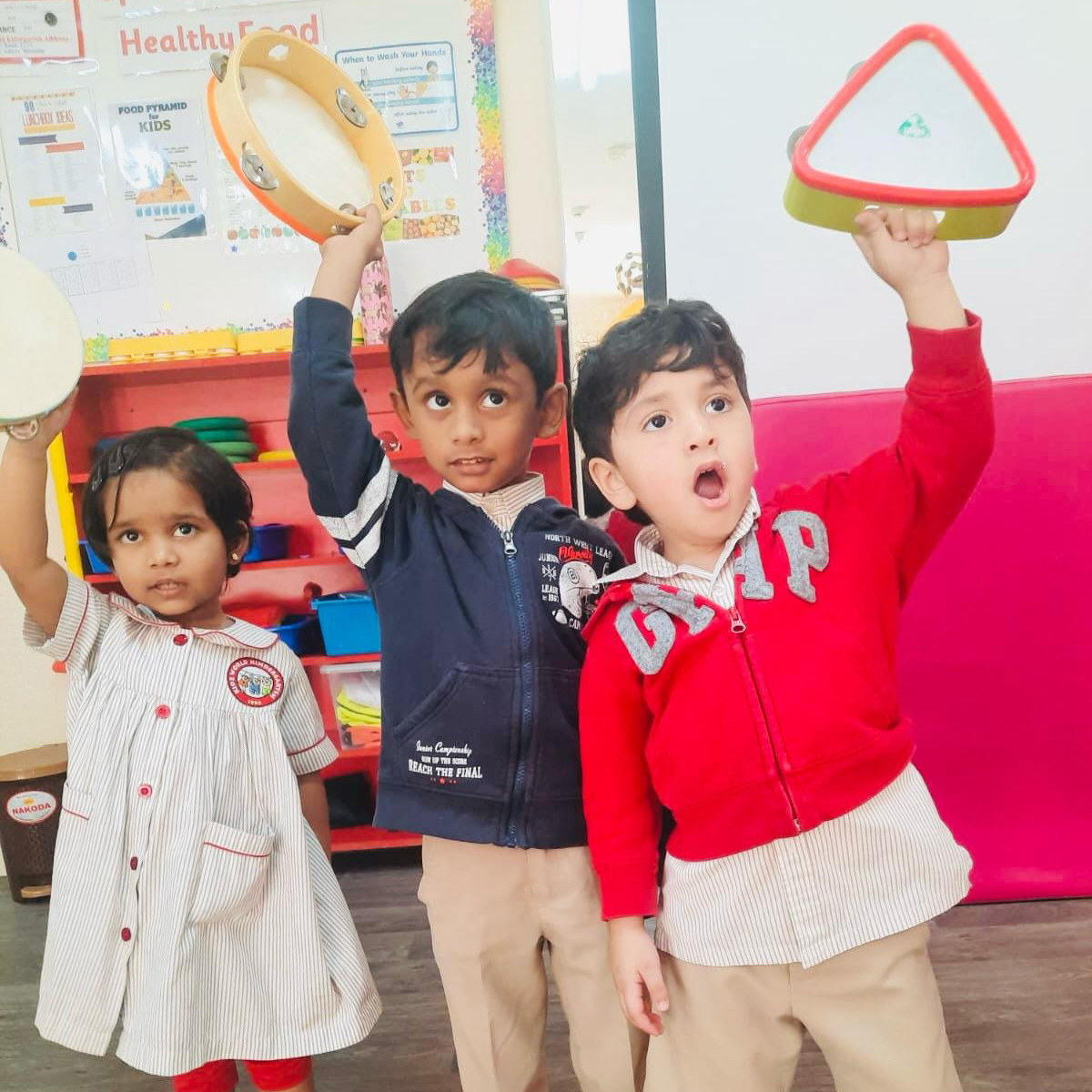
Children might move through phonics and literacy activities, mathematics sessions, group discussions, and story time, alongside art, music, drama, and physical education. Indoor and outdoor play and exploration-based activities are part of the day too. Specialist subjects including Art, Music, PE, Science, and Modern Languages add further variety and breadth to the learning experience.
How Reception Prepares Children for Year 1
By the end of Reception, children have laid foundations in literacy and numeracy, but also in the personal skills which make formal schooling manageable. They have learned to listen, to focus and to work through age-appropriate activities. They’ve developed communication skills, grown in confidence, and started taking genuine ownership of their learning. These things matter enormously when Year 1 begins, making the transition feel like a natural next step rather than a sudden change.
How Parents Can Prepare Their Child for Reception
The most useful preparation parents can do doesn’t look much like academic work. Reading stories together regularly, talking about everyday experiences, practising counting during daily routines, and encouraging children to ask questions all help. Giving children opportunities to make simple choices, encouraging them to tidy away their own things, establishing consistent morning and bedtime routines, and speaking positively about starting Reception can make a real difference to how a child approaches the experience.
Why Choose Kidsworld Kindergarten for Reception?
Kidsworld approaches Reception as a year of development across academic, creative, physical, social, and emotional dimensions. The British Curriculum pathway running from Nursery through Reception to Year 1 gives children a clear, well-structured progression through their early education.
For families looking at reception classes in Bahrain, the programme at Kidsworld offers age-appropriate learning alongside play, exploration, specialist subjects, and teachers who genuinely invest in supporting each child’s development.
Reception Admissions at Kidsworld Kindergarten
The Reception programme at Kidsworld Kindergarten is for ages four to five. If you are interested in getting an admission for your child, you can contact our kindergarten directly to find out about the current admissions process, availability, programme details and entry requirements.
If you are considering reception year options in Bahrain, knowing the curriculum, the approach to the classroom and how the school prepares children for Year 1 will help you make a decision that you can feel confident about.